Whole life carbon assessment for the Hampden regeneration project

Assessing the carbon output of upgrading existing buildings versus demolition and replacement
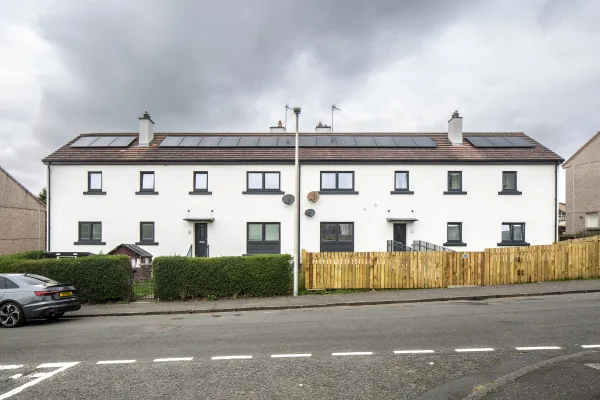
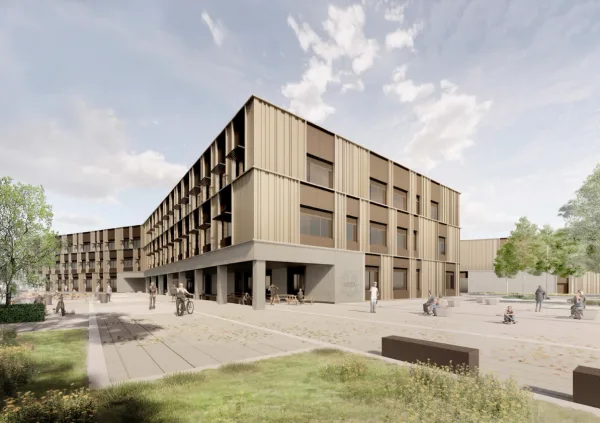
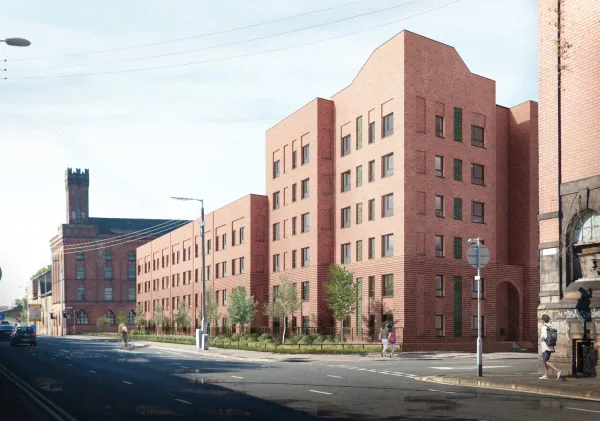
We carried out a carbon assessment for the Hampden regeneration project, comparing the carbon output between converting and upgrading the existing building compared to demolishing and replacing what’s there.
Two options were modelled in a comparative whole life carbon assessment. The first looked at retaining and retrofitting the existing three and four-storey flats – applying a benchmark retrofit equivalent to abc’s Burdie House Drive project. The second looked at demolition impacts, with a replacement of two new four-storey blocks using RICS-based benchmarks, electric heating, and photovoltaic installations.
This assessment identified the carbon implications of both retrofit and new-build options, providing the evidence-base for decision-making by balancing carbon performance, cost, and user outcomes.
In numbers
990
kgCO2e/m2, Retrofit Whole Life Carbon
910
kgCkgCO2e/m2, New build Whole Life Carbon
8%
Higher carbon intensity per m² with retrofit vs new build
- Angus Council’s net zero local development plan
- Whole house retrofit
- Paisley Grammar School’s strategic net zero assessment
- Estate management for Renfrewshire Council
- Balance retrofit analysis for a Renfrewshire High School
- Comprehensive carbon assessment for Dalquharran Estate Holiday Lodges
- Whole life carbon assessment for the Cook Street development